The Fox Meridian Lexicon

So, Fox Hunt is out tomorrow and I thought I’d give you all a hint of things which might appear in Fox’s world. Now, this is a direct paste of the lexicon I compiled for my use, and for Kate, my proofreader, and it currently spans three completed books, so don’t expect to see all of it in the first.

Now, if you read on a Kindle, you may get a bonus since I think X-Ray pulls information out of Shelfari and I’ll try to get as much as possible of this into the glossary listing there. Of course, that’ll take time, so all you folks who devour my books two minutes after they go on sale might have to check back after that first read or, date I say, read the book a second time. I know, a terrible hardship. That’s why you get to do the manual lookup here if you like.

  • AI: Artificial intelligence (except in agricultural circles; look it up). AIs are grouped into ‘classes’ based around how closely they mirror humans in sentience and processing power. Class 1s are dumb, barely aware, never learn, and don’t have emotions. Class 4s are largely indistinguishable from a human. All AIs are infomorphs.
  • Android: A humanoid cyberframe. Often a male bodyform, but the term is used more generically for male and female shells.
  • Arcology (arcologies): A self-contained, largely self-sufficient, ‘hyperstructure’ designed to allow people to live in it without ever leaving the building if they wish. These structures are enormous, some exceeding a kilometre in height.
  • Arigeep: A genetically modified sheep breed used in America. Compounded from arid, goat, sheep.
  • Bindwire: Genericised trademark name for a kind of plastic fibre a little like high-tensile silly string. Used in crowd control and prisoner capture, the material forms thin, very strong fibres which stick to a subject, tangling their limbs and fixing them to the spot.
  • Bioroid: A ‘biological android.’ Currently (2060) little more than a concept. These are artificially created life forms which can be manufactured, but require normal growth processes. (Wet nanofabs will fix this.)
  • Blip: Short video advert designed for insertion into IB channel multicasts.
  • CRS: Cyber-Rejection Syndrome. A collection of conditions which either preclude the use of cybernetics or tend to make them malfunction over time.
  • Cyberframe: Some form of robot body which can be operated by remote or by an AI.
  • Dopy (dopies): One who is high on drugs, alcohol, virtual mood enhancement, or just life.
  • Droid: Shortened from android, but typically used when the gender-form of the frame is unknown or unspecified.
  • Emergent AI: A lower class AI which develops to AI-4 on its own. No one knows how this happens, or whether it has actually ever occurred in real life.
  • Force de Police Républicaine (FPR): Canadian national police force, replaced the RCMP in 2032.
  • Frame: Shortened form of cyberframe.
  • Gynoid: Specifically a female bodyform android. Some consider the term crass, others consider it more accurate and correct than using android. (When wishing to ensure no offence is given ‘cyberframe,’ ‘frame,’ or ‘droid’ is always correct.)
  • Hyperstructure: A very, very large building.
  • Infomorph (infomorphs): An entity which exists as data. Probably an AI of some sort. (I didn’t make this one up!)
  • JITC: Just-In-Time Compiler. A mechanism for allowing code to run on multiple machine architectures. (I didn’t make this one up either.)
  • Lensman (lensmen): UNTPP operatives. Derives from the first book of E.E. ‘Doc’ Smith’s Lensman series, Triplanetary, which someone thought was just like ‘Trans-planetary,’ and also the perceived gung-ho attitude of UNTPP cops.
  • LifeWear: Wearable computing technology (a small headset) designed by the LifeWeb people and sold as designer tech (rather like the iPhone today).
  • LifeWeb: Replaced Facebook as the number one social site due to a focus on sociometry, the control and visibility of the links between associates.
  • LWOS: The LifeWear Operating System, a VA designed to interoperate with LifeWeb, running on LifeWear hardware. Pronounced ‘L-was.’ Attempts to get it pronounced like ‘low-os’ never caught on.
  • NAPA: North American Police Administration. In a similar manner to NIX, NAPA was formed to reduce administrative overheads and improve efficiency, collecting together metropolitan and federal police agencies, and judicial enforcement under a single banner. Unlike NIX, NAPA has a fairly reasonable reputation: certainly no worse than the old cops.
  • Napper: Derogatory term for police in America. From NAPA, obviously, but also aimed at suggesting most of them are asleep on the job. Believed to come from the common conception that, since patrols are performed by cyberframes, the rest of the cops spend most of their time in bed.
  • NIX: National Intelligence eXecutive. America’s national intelligence agency, formed from all the civil and military intelligence agencies in what was described as a cost-cutting exercise. Generally considered as a Big Brother organisation.
  • Nomad AI: A (currently theoretical) AI which exists on the internet and has nowhere to call home. They hack into computers powerful enough to host them, taking over operations or hiding on unused processors.
  • PA: Short for personal assistant. Where this is an AI rather than a human, a PA is generally a class 4. PAs are likely to run on a server and interact with their owner via telepresence since (as of 2060) few implants are capable of executing a class 4 AI. See also VA.
  • Painaway: Proprietary painkiller about equivalent to aspirin, but without the side effects.
  • Pearl, the: The pearl is the best, the ultimate, the greatest ever. From sup-PERL-ative.
  • Plazkin: Technically a trademark, but now so standardised that it’s become a generic word. A thin, polythene-like plastic material with elastic qualities. Used in a lot of clothing. A common component in 3D printed clothing and easy to recycle for reuse.
  • Q-bug: Basically an electric quad-bike, commonly used for transport in agricultural regions and on Mars.
  • Robot: A robot, obviously, but now used more specifically for devices which have their operating software built in (firmware) rather than cyberframes which can have operating software downloaded. The more generic meaning of a self-motivated device does still apply: robot is used where the precise nature of a device is unknown.
  • Slideway: A moving sidewalk, generally elevated, generally running from a station to an arcology or apartment block, or between associated apartment blocks.
  • SOS: Acronym for Smart Operating System, an AI (usually class 2) which is used to operate a computer through vocal/gesture/neural command.
  • Sprawl (usually has a capital ‘S’): The litter of temporary and semi-temporary dwellings which fill the spaces between the arcologies, apartment blocks, and other permanent structures. Some Sprawl is actually old buildings still in place, but those occupying them are technically squatters and could be kicked out if someone wanted the land. Others live in tents, old cars, lean-tos, and whatever else they can find shelter under.
  • Sprawler (sprawlers; not usually capitalised): One who lives in the Sprawl.
  • UNTPP: United Nations Trans-Planetary Police. Effectively Interpol with teeth. Responsible for international and interplanetary policing, and liaison between national and private forces.
  • US: Mostly used in speech as a shorthand for America. It no longer really means “United States” since there are no states, officially.
  • V-tag: A device which emits a signal detected by local receivers and interpreted by a neural implant or wearable interface to augment a user’s virtual environment (viron).
  • VA: Short for Virtual Assistant.
  • Viron: Virtual environment. The environment created through the use of an implanted computer/neural interface system and its interaction with v-tags.
  • Virtual Assistant: An AI program (generally class 2 or 3) which provides basic augmented reality functions (memory enhancement, facial recognition) and secretarial functions.
  • Wet Nanofab: A fabrication system which performs bottom-up object construction starting from a molecular source. It requires carefully controlled conditions to operate and is done in a ‘soup’ of nanomachines and source material, hence the ‘wet’ part.

iFox

Characters Development For Weirdos

Well, I am a bit weird, some say a lot. Developing a character for me is a process which can go on for a while and I thought I’d share. As an example, I’ll be using the heroine of my new series, Fox Meridian, partially because it’s publicity, and partially because she’s had a more complex development than some.

Okay, so generally I have a concept first. The concept comes from something I’ve watched on television, something I’ve read, and quite frequently from some random thought passing through my brain. This has been stewing in my head for several hours, usually more like a day or two. If an idea can’t hold onto my attention for a day, how is it going to hold yours. If I wake up and the concept’s gone, it doesn’t get written down. That’s if this is a primary character, of course. If they’re a secondary or an antagonist their concept will likely flow out of the plot for the story: I need our protagonist’s best friend, the leader of a militant terrorist group, whatever. Fox’s concept is “tough cop with a history, living in the near future.”

By now I’ve got a OneNote notebook set up for the project. I use a couple of tools for managing all the notes and such I keep on book projects. The main one for randomised notes is OneNote (which Microsoft made available for free), but I used to use Evernote with reasonable success. I prefer OneNote’s organisation. Recently I started putting some things into Trello, which is a sort of online project management tool: primarily lists, ideas for future stories, and To Dos go in there. About now I create a OneNote page and I write down my character’s name, maybe who their parents were, and a bit of description. The latter is going to be a rough outline of the character, where they came from, where they are now. I quite often end up changing the details in this as the demands on the character shift. (In Ugly this got changed because I got two characters a little twisted and confused their parents. Always read your notes, people!)

Usually, about now I’m off to my heaving great big graphics computer. I need to know who this person is and a picture is a thousand words, and that. So, I pull up DAZ Studio and start hunting through the pre-formed characters I’ve bought. What I’m looking for as the write shape and skin tone. I rarely use a pre-made model as is for any of my characters, never mind the main ones. Sadly I can’t use ZBrush worth a damn (or draw which would be even better) so I can’t uniquely sculpt a character, but I can sit there and tweak cheekbones, the corners of eyes, the wrinkles on brows. I can take the shape of one character and wrap them in the skin of another, change the eyes, select and colour the hair. Hair really changes the shape of a face and it says something about this person. When I think I have it right I do test renders: like many a WYSIWYG editor, Studio doesn’t quite show you what you get so it’s a good idea to look at the finished result.

Fox - Early Study

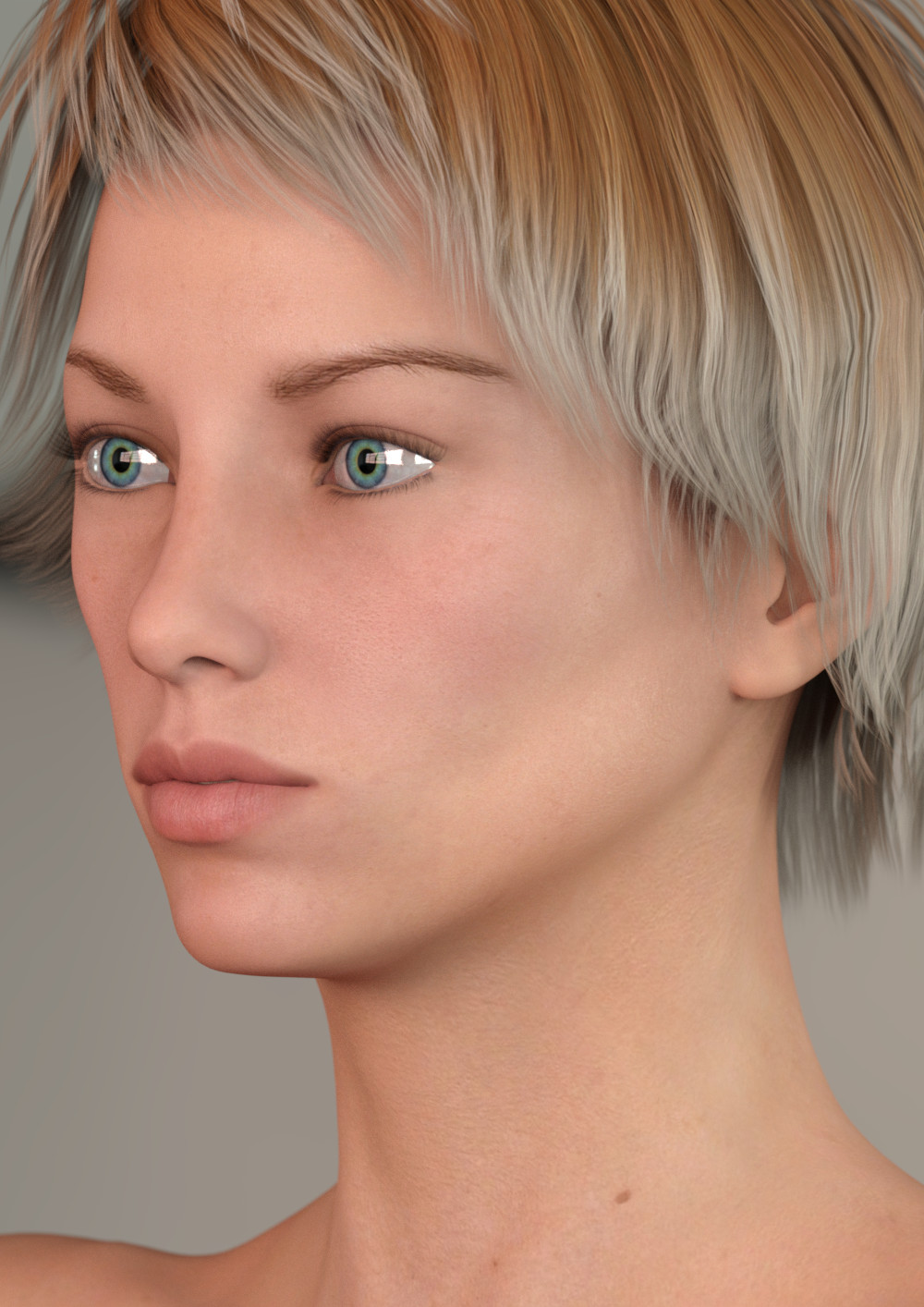
This is one of the earliest renders of Fox. At this point she’s a Genesis 2 Female model. Case in point here about the importance of visuals to me: Fox was not Fox until I saw this. I can’t remember what I was calling her. Her name is actually Tara Meridian and maybe that’s all I had, but then I saw that hair and I thought “some kid at school said she had a fox on her head, she split the kid’s lip, but the name stuck, and now she likes it.” So, yes, that’s why she’s called Fox. To date no one has called her Foxy, and if they do we can expect another split lip. (I am going to be accused of making an obvious “attractive woman” reference with this one, but the hair is genuinely how she got the name, both fictionally and in reality.)

Probably while the first render is cooking, I’ll start designing the character. For me “designing the character” has a rather more specific meaning than for some, I think. Out come my PDFs and I start building the character in GURPS. GURPS, Generic Universal Role-Play System, is a pen-and-paper RPG produced by Steve Jackson Games. It’s point-based and designed to work reasonably well with any background. That means I can use it for fantasy and sci-fi characters, and it means I’m not stuck with “you’ve selected the Ranger class and must select one of these abilities at level 3.” No levels in GURPS, just point totals. I largely ignore the point totals, but they come in useful for some things such as education. For example, younger characters should have fewer skills than older ones or those who have had intensive training. A lot of stuff just doesn’t make sense to worry over it, however, so I don’t. I build my character, decide how strong they are, how intelligent, their build…

Oh the build. Backtrack a little here. I used to judge all this by eye, but now I have a tool for DAZ Studio called Measure Metrics. That gives me more measurements for my character model than I could ever want. With the model built and me happy with it, I’ll take down their measurements in OneNote. Yes, I know the cup size on all my female characters, US and UK sizes. I can also tell you their wrist circumference. Fox is a C. I assume you don’t care how big her wrists are.

Back to the character build where I’ll be deciding on how attractive they are, how wealthy, what kind of abilities and skills they have, what kind of faults and flaws. Why bother? Because, while I’ll tweak these stats where I need my character to do something I’d never thought of, or (more likely) I realise they must be able to do something I didn’t put in the build, this character description keeps me honest. Ceri never pulls magic out of a hat without working as long as she needs to do it. Aneka doesn’t survive a plasma blast in one book which should have punched through the armour described in the last (unless the armour has changed). No one buys something in a shop which their character would never be able to afford.

Now, while this is happening, the world is taking shape around the character. (I’ve begun with a world and built the characters from it and it’s never worked. My books have a character focus and the world should fit to them, not the other way around.) I’ll be bouncing around creating more OneNote notes which fill in the background around the character. So, Fox is a ranking officer in a police agency called NAPA: I need to create NAPA, give it form and a rank structure, and layout how their geographical structure works to fill in that one element of Fox’s sheet. She’s associated with a guy named Jackson Martins and his daughter, Teresa, who own a huge conglomerate called MarTech: so MarTech (and Jackson and Teresa later) get designed and described. I need to work out the world’s social status hierarchy so that I have an idea of how wealthy Fox needs to be to support the lifestyle I intend her to have. Building the character helps me to solidify the world they live in.

So, now I know what my character looks like and what they can do, and I have a good idea of their character, at least in broad strokes. The last part, who they are how they behave, how they think, that comes from writing them and I may have to go back to update the stats as I work along. I’ll do more concept pictures to decide on a look for a particular scene and it gives me a sense for the character’s style of dress, or maybe they don’t really smile broadly because their face pulls contortions if they do.

With Fox there was another stage because DAZ brought out the Genesis 3 Female model while I was writing Fox Hunt. Wanting to try out the new tech, I recreated Fox as a G3F and was then faced with whether I like the old model or the new. I eventually went with the new one, so her look changed a little. I actually took the old model and altered it some to create Fox’s mother, so that wasn’t wasted.

fox-face2-17

So this was actually produced to test out some new eyes, but it shows Fox’s new G3F face. The eyebrows have a less pronounced arch and I think the features are a tiny bit softer. I was never happy with the eyes until I found this pair of lovely blue-green peepers. Fox is set, at least until something in a book changes something about her and I need to create a new sheet for her. She’ll get updated over time, as she learns and develops. Characters grow over time and I have plans for Fox, some of which may never happen. It all depends on how her story develops. Can’t wait to find out what happens.

iFox

Patreon patrons can see some more images associated with the development of Fox, just posted on the site. Link on the right. There will be more public posts and concept art coming prior to the release of Fox Hunt on September 8th.

(PS. Took me longer to post this than expected. Hope it was worth the wait.)

This Weak and Vague Posting

…is brought to you by a need to write something down.

I’ve been quiet, I know. I’ve got this fairly long post planned, probably for this weekend now. I was planning to do it today, but It’s going to be a little while before I write anything else after what I just wrote in the book I’m working on.

You’ll be happy to know that the reason for my silence is that I’m being productive. I don’t think my writing has gone quite this well since the early days of the Thaumatology books, so I really, really hope you guys are going to like Fox, because I really like writing her.

Except just now. I’ve been working up to this bit of the book for a while and I knew what was coming. It’s part of the plot, and it’s part of real life for some people, and I am beyond thankful that I cannot say I’m writing from personal experience. And I’m being vague to avoid giving away the plot, but I’ll say I’m going somewhere with this story that is maybe a little more serious than some of the stuff I write.

When you write, or when I do, you put yourself in there with your characters. To me, who started role-playing at thirteen, it’s like a roleplaying exercise. You put yourself in the story and you become that character for the time you’re writing them. I’ve just spent a good couple of hours writing something that upset my character, and I don’t think I was quite ready for my reaction to it. I really hope this comes over when you read this.

For right now, though, I’m going to have to do something else until I can get my head out of character-space. Otherwise going back in is going to be bad.

Have a good weekend, folks.

Best Laid Preorders

So I’ve just had to drop the release date for Fox Hunt back a week, to the 8th of September, due to some scheduling conflicts. And this is why I usually don’t announce release dates until they are bolted down and sealed with superglue.

iFox

A Foxy Experiment

iFox

Pre-orders are the new black. At least that’s what Mark Coker at Smashwords keeps telling me. Not just any preorders though, it has to be pre-orders with Smashwords. I’ll give his reasoning in a bit, but some new changes in the rules mean I am able to put Fox Hunt out for pre-order, thought Smashwords to Apple iBooks, Kobo, and Barnes & Noble.

If you buy my stuff from any of the above, here’s your chance to get in an early order. You’ve got two months, there’s no hurry. Any orders placed before the release date (August 31st) will be counted as sales on release day, plus the book will be available on those stores on release day, which is a plus since there’s usually a delay. That could mean the book pops into the top sales lists on those retailers, and that could mean more people see it and buy it. That’s the logic behind pre-order system.

Here the logic behind me never doing this before. Essentially, to do a pre-order on any retailer up to this point, I had to write the book, edit the book, have the book proofread and edited, do the cover, and make all the final edits. I needed to have a finished book which I could hand to Smashwords/Amazon months before my intended release date. That might make sense to a large publisher who has an entire anticipatory marketing machine to get up to speed, and has lots of money to keep them going while they aren’t selling books to anyone. It might make sense to an author with a bestselling back-catalogue who’s still living off their last advance payment. To those of us who self-publish it’s downright dumb.

Smashwords have apparently worked out that this is kind of silly for most of the people who actually publish material through their service, and they now have what’s called “assetless per-orders.” It means that I can cut out the need for a finished manuscript, and even a cover, and still make a pre-order available for sale. They’d like me to do it a lot further in advance of the release date, but I still want to have a finished first draft (my first drafts are maybe more finished than some people’s, who will go through a dozen drafts before release) before I commit to a release date, so I’m not going to do pre-orders more than 3 months ahead, at maximum (2 months is far more likely).

So, if you read on an IPad or IPhone, or you try to avoid buying from Amazon, go take a look on your favourite retailer and consider a pre-order of Fox Hunt. And just remember, watch out for the fox.

Reality Hack – It’s Out There

Someone’s noticed that Reality Hack is available on Smashwords, so I guess the secret’s out.

As an aside, for those checking out the Smashwords pages, you may see an indication of the next book too…

Reality Hack – Cover Reveal

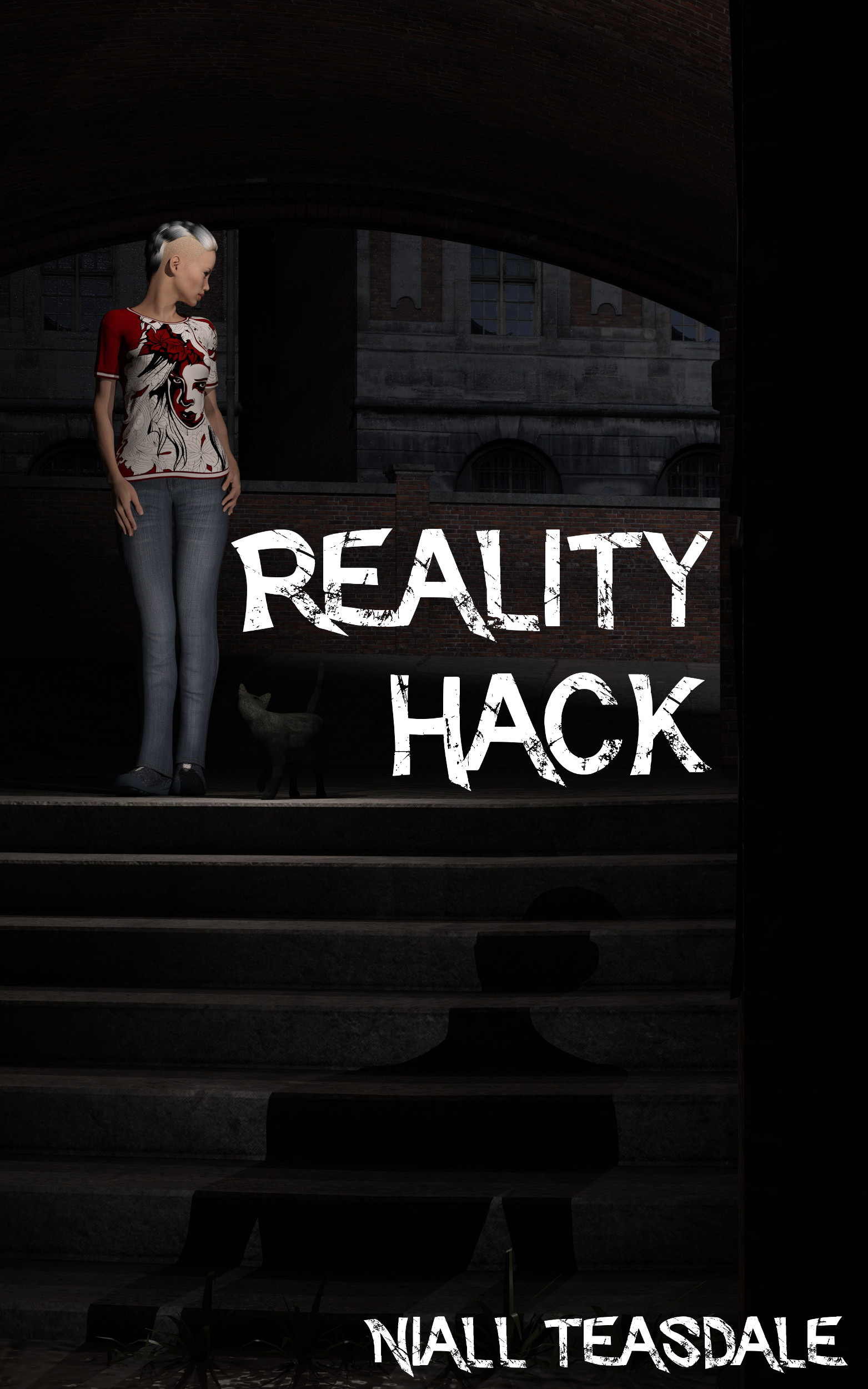
Reality Hack CoverI’m just going to drop this here and let you wonder about it.

Reality Hack – Still Not Sure About the Genre

So, Reality Hack is due out on the 4th of July and I’m still not sure which genre it sits in. I hate genre classifications and it’s always been clear to me that those responsible for such classifications know not what they are talking about. Please allow me to vent…

If I go to Netflix or Amazon Prime Video, and I go looking for a science -fiction movie, I am going to find myself looking at a load of fantasy, some horror, quite a bit of romance that has a vague hint of sci-fi about it. (Well, with Netflix’s idea of classification, looking for a sci-fi movie is an exercise in frustration anyway, but the general idea is the same.) These companies classify everything with any form of fantastic basis as the same genre. I can’t help but wonder whether this general lack of clarity bothers other people as much as it does me? I mean, if they have to split things into groups, could they not do the job properly?

Meanwhile, the book publishers are worse. They want their books classified into increasingly narrow bands of genre, but they haven’t a clue what the genres mean. The Game of Thrones books are not science fiction. Twilight is not science fiction, but of course that august work more or less defined a genre which spawned from some publisher’s desire to corner a market, the ‘Young Adult’ genre. (I believe that YA actually stands for ‘Youthful Angst,’ but that may be just me.)

The genres they create usually don’t work for real books. You take the series I’ve been reading a lot of recently, J.D. Robb’s In Death books. These are police procedurals, set in a high-sci-fi near-future, with a fairly high romance/erotic content. Well they don’t get classed as erotica, or ‘adult,’ but they do get a load of other categories lumped on them. The aforementioned Game of Thrones: is that political thriller or grim, ultra-low fantasy?

So, I’m having difficulty with Reality Hack. It’s clearly urban/contemporary fantasy, being to do with magic and the supernatural in a modern setting, but I’m inclined to avoid that area since there’s no romance involving vampires. It has some distinct horror elements (and if it gets a sequel there will be more of that). The actual setting has some heavy science fiction elements to it as one might expect of a book called Reality Hack. There is romance and sex, yes, but there’s also some twisted psychology, and drama, and questions about the nature of reality, and I have to pick a couple of narrow slots to drop this complex tin of worms into.

Don’t get me wrong: without those tight little boxes I doubt anyone would have noticed Steel Beneath the Skin and most of you would not be reading this blog. It’s just that around the time when I have to decide what box to put a book in, I sort of long for the time when it was just ‘fiction’ and ‘non-fiction.’

Watch for the Fox

iFox


(FYI: This was made with this.)

Continuity of Reality

Someone mentioned the idea of crossover-style stories in a comment and this is not exactly about that, but it’s related: how connected are the universes my novels take place in?

First off, what universes are we talking about:

  • Thaumatology: This world came first, so it’s first in the list. A fantasy reality with a modern, alternate history setting. Magic exists, and demons and fae, and there are at least three connected dimensions with travel between them. The setting does take a view that magic can be explained through science: humans (the protagonist for example) have created a branch of physics called thaumatology to study it. However, the Thaumatology Earth was fairly magic-free before 1945.
  • Aneka Jansen: Starting out with a relatively hard science basis, Aneka’s universe has progressed to more and more “magic science.” I could do an entire article on what I consider “magic science” to be, but when Aneka kicked off the only real super-science elements were FTL (travel and comms) and gravity manipulation. Over the course of time we’ve had force fields and wormholes work their way in.
  • Ultrahumans: A superhero reality where a mysterious “cosmic power” gives some people the ability to do amazing things.
  • Unobtainium: A steam/retropunk world where the “Miracle Metal” Unobtainium has been discovered and has forged a surge in technological development which did not happen in our world. In the 1920s they have near-indestructible warships, super airships, powered exoskeletons, and nuclear reactors.
  • Reality Hack: You haven’t seen this one yet and I won’t spoil too much yet, but this is an urban fantasy setting with a twist, and a system of magic which involves, well, hacking reality.
  • Fox Hunt: (You heard it here first folks!) The book to follow Reality Hack is currently called Fox Hunt and the setting for it is a near-future, hard-science one. It’s bright cyberpunk: the world has its cruddy, dark side, to be sure, but it’s not a typical near-future dystopia either. So, science, no magic, and that’s all you’re getting for now.

So, do I put all my worlds in one, overarching cosmos? Could Ceri Brent take a step sideways and visit Aneka? Well, let’s put that one to bed first: no because there’s one thing I don’t like and that’s time travel, and Aneka’s world is a thousand years after Ceri’s as well as being a dimension away. Aside from the possibility of comedy short stories, Ceri and Aneka are not going to meet. (And can you imagine it? Ella and Lily would vanish into a bedroom and never be heard from again. No. Just no.)

On the other hand, there is a little hint in Steel Beneath the Skin that Aneka’s world is part of the same cosmology as the Thaumatology books. It’s subtle and I always wondered whether anyone ever noticed it, but it is there. (And no, I won’t say what it is, because I’m evil.) In truth I’ve never really come to a solid decision about whether the Ultrahumans cosmic power and Unobtainium are explained via the same processes as Thaumatology’s magic, but I could certainly make an argument for it.

Reality Hack is a very special case and is definitely not governed by the same rules as the other worlds. You’ll get more on the reason for that (assuming you haven’t guessed) in the next few days as I ramp up to its release. Fox Hunt’s setting is the same, but for different reasons: it’s a hard-science setting so you are not going to see the kind of fantastic stuff which exists in the other books. Fox Hunt is about technology as it might progress in our world, plus the usual kickass heroine, no need for magic.

So, a lot of my stuff probably exists within the same cosmological reality with the same fundamental laws of physics modified by conditions within a particular universe. (If you want to know how the magic works, you need to go read some of Ceri and Cheryl’s papers on thauminos and the Super-Magic Field. They’re a bit heavy on the maths though.) It’s theoretically possible to have some of the characters wander from one storyline to the other. Outside of non-canonical short stories done mainly for comedy, however, don’t expect to see it from me. The worlds I make are separate for a reason and they’ll be staying that way.